
The Engineering Mechanics of Cabinetry Alignment: How to Adjust Cabinet Door Hinges with Precision
- By:
- Date:2026/09/22
A misaligned cabinet door is a mechanical failure disguised as a minor aesthetic annoyance. Gravity acts continuously on cantilevered wooden panels mounted in your kitchen. This constant downward pull stresses mounting hardware and creates uneven gaps over time.
Understanding how to adjust cabinet door hinges requires looking past the surface appearance of the hardware. It demands a working knowledge of structural load distribution and hinge kinematics. Small mechanical adjustments dictate whether a kitchen installation degrades rapidly under daily stress or maintains its integrity.
We will tear down the specific engineering principles governing these articulated hardware joints. Professional grade hinges rely on precise geometric tolerances to function correctly within wooden frameworks. Learning the mechanics of these adjustments transforms a frustrating trial-and-error task into a predictable physical equation.
The Physics of Cantilever Loads on Cabinetry
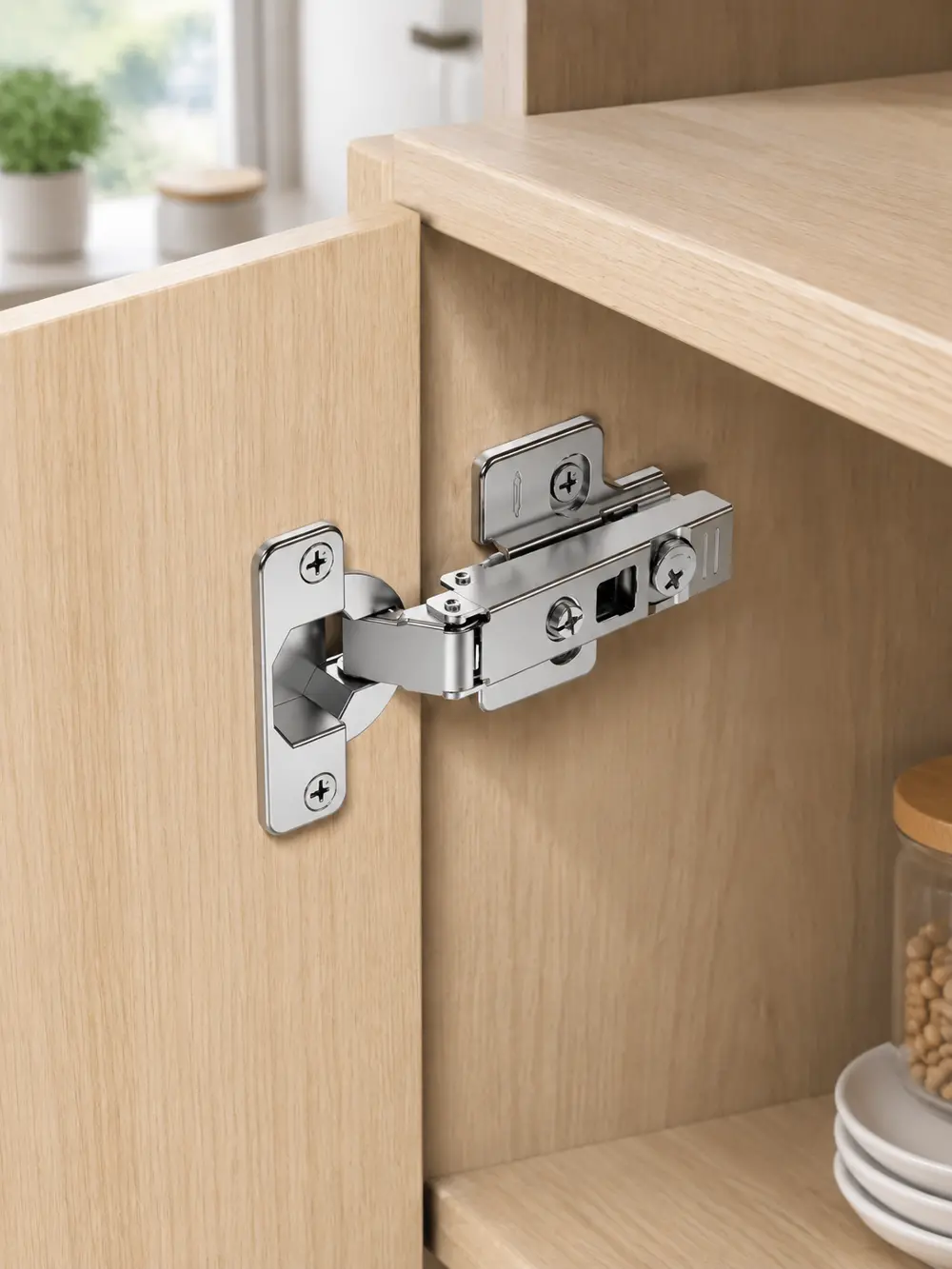
A standard wooden cabinet door acts as a lever arm attached to a stationary frame. The hinge mechanism serves as the fulcrum for this dynamic load. Every time you open the door, the center of gravity shifts outward.
This outward shift generates significant torque on the mounting plates and hinge cups. The weight of a standard panel, typically ranging between 14 to 22 millimeters in thickness, pulls downward against the top hinge. Simultaneously, the lower hinge experiences a compressive force pushing it into the cabinet frame.
Engineers design heavy-duty hardware like the B20 two-way hinge to counteract these specific directional forces. A standard hinge cup requires a 35mm diameter and an 11.3mm boring depth to anchor securely into the wood. This geometry provides enough surface area to absorb rotational stress without splitting the medium-density fiberboard.
When doors begin to sag, it rarely indicates a failure of the steel components themselves. Instead, the sag represents a gradual shifting of the adjustment screws under continuous vibrational loads. Recognizing this physical reality is the first step in diagnosing alignment issues.
Decoding the 3D Adjustment Mechanism
Modern hardware allows for seamless alignment of cabinet doors in six directions after installation. This 3D adjustment capability separates professional hardware from basic pivot hinges. You manipulate the physical orientation of the heavy door panel by turning specific calibrated screws.
The horizontal adjustment screw governs the side-to-side movement of the door structure. Located closest to the center of the hinge arm, this screw operates on a cam mechanism. Rotating it alters the angle of the arm relative to the mounting plate.
Turning this central screw clockwise pushes the door edge closer to the frame side. Turning it counter-clockwise pulls the door away, increasing the gap. This lateral shifting is crucial for making double doors meet perfectly in the center of a cabinet opening.
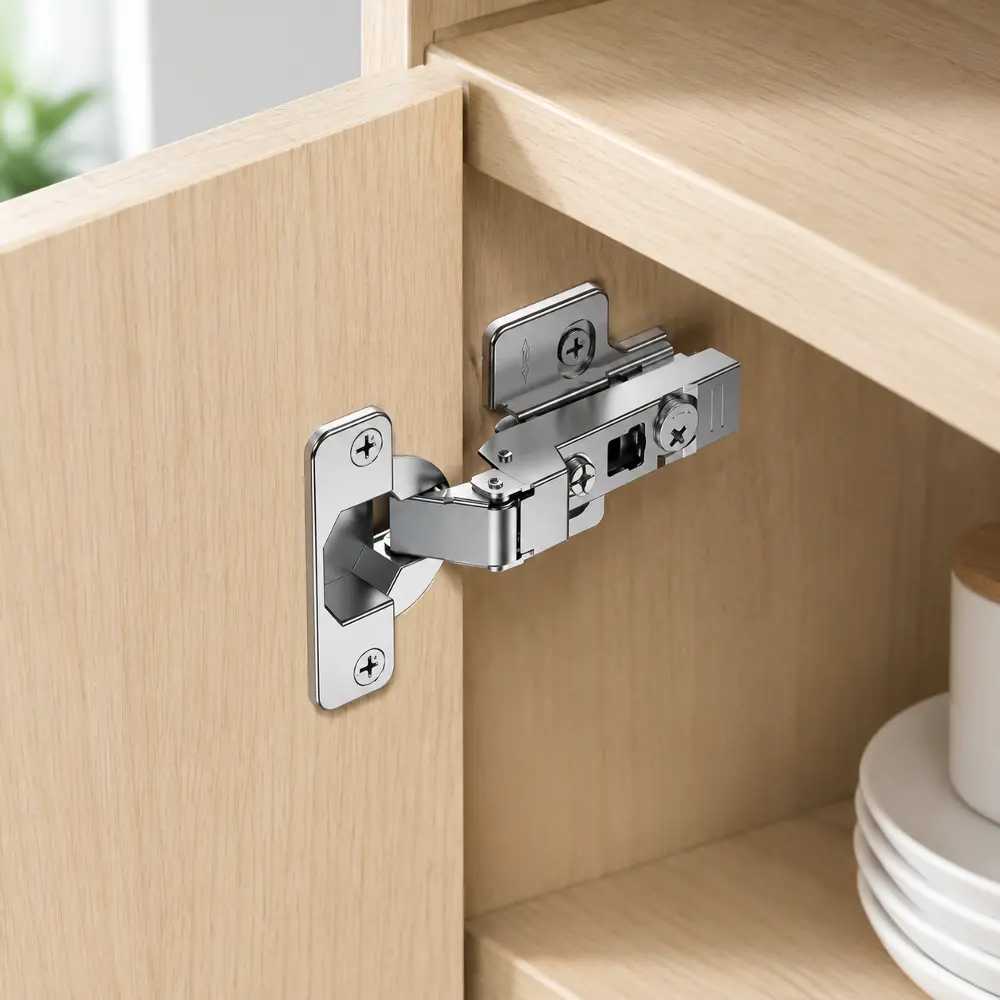
Vertical adjustments handle the up-and-down positioning of the entire door panel. You will find these screws located on the mounting plate attached to the inner cabinet wall. Most systems feature elongated slotted holes where these mounting screws sit.
Loosening these vertical screws slightly allows the mounting plate to slide up or down along the cabinet wall. Friction holds the plate temporarily while you secure the new position. You must fully tighten these fasteners once the desired height is achieved to prevent gravity from pulling the door down.
The depth adjustment screw sits at the far rear of the hinge arm. This mechanism controls the in-and-out positioning of the door relative to the cabinet box. Adjusting this gap is critical for ensuring that damping mechanisms function properly without binding against the wood.
Six-Directional Axis Manipulation Guide
- X-Axis (Lateral): Controls the side gap. Prevents neighboring doors from scraping during the swing arc.
- Y-Axis (Vertical): Controls panel height. Aligns horizontal reveals across a continuous run of cabinetry.
- Z-Axis (Depth): Controls frame compression. Manages the space required for bumpers or internal damping cylinders.
Force Distribution in Two-Way Hinge Systems
Managing the physical forces exerted during the swinging motion is vital for long-term hardware survival. Standard single-way hinges snap shut violently once they cross a certain angle. This sudden impact transfers a massive shockwave directly into the hinge cup and the surrounding wood fibers.
A two-force design fundamentally alters this harsh kinetic reality. This mechanism effectively manages both opening and closing forces through a dual-spring architecture. The secondary spring counters the primary closing force, creating a smooth transition zone before the door meets the frame.
This force management reduces the load strain on the 35mm hinge cup bore. Over the 100,000 cycles of a standard ANSI/BHMA Grade 1 test, mitigating this impact force prevents the mounting screws from pulling out of the wood. The two-way system inherently protects the structural integrity of the cabinet door.
Metallurgy and Long-Term Holding Power
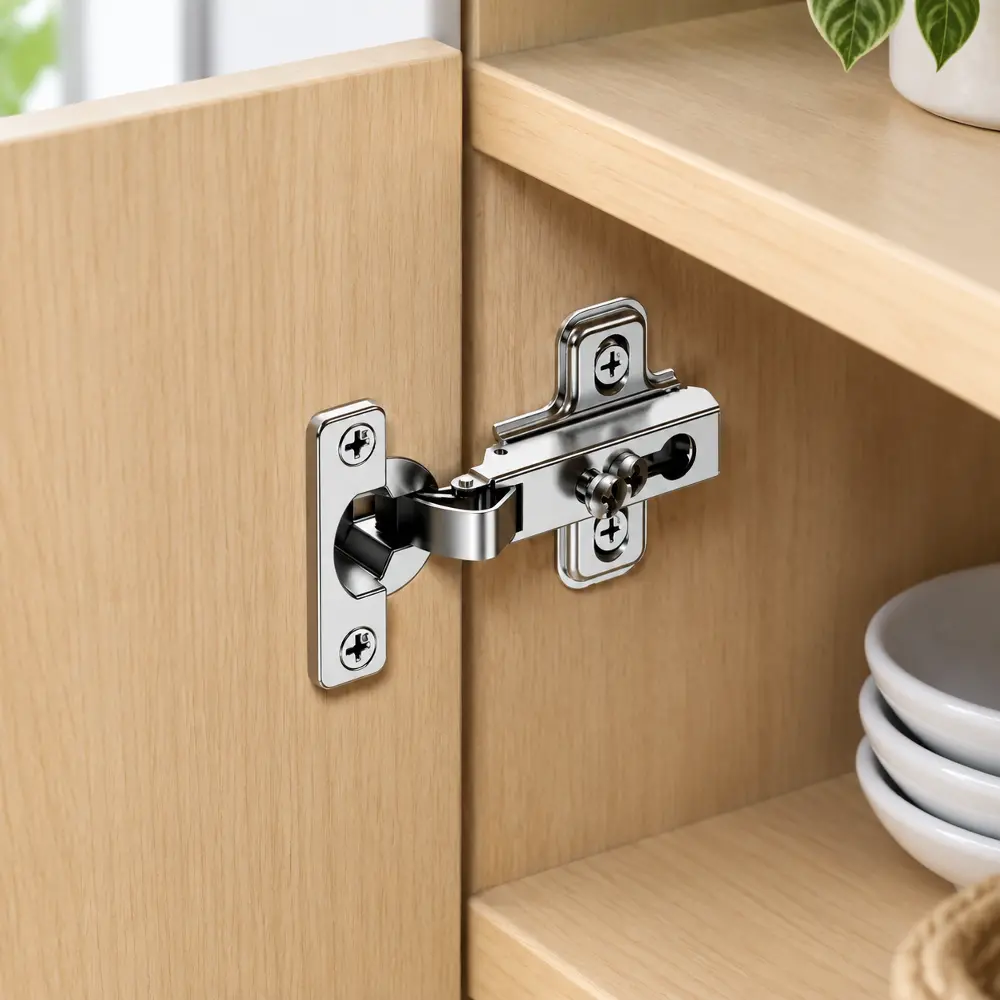
Adjustment mechanics are useless if the metal deforms under the pressure of a screwdriver. The structural components must possess exceptional hardness to maintain the precise calibrations set during installation. Raw material processing dictates the functional lifespan of the entire assembly.
Connection parts undergo specialized heat treatment during the manufacturing process. This thermal cycling alters the crystalline structure of the iron, significantly increasing its surface hardness. This treatment also enhances the wear resistance and fatigue strength of the articulated joints.
Without proper heat treatment, the threads on a lateral adjustment screw would strip after minimal use. The cam mechanism would flatten out, rendering precise six-directional alignment impossible. Structural hardness ensures that rotational inputs from your tools translate directly into physical movement.
Environmental degradation poses another severe threat to fine mechanical adjustments. Kitchens and bathrooms represent harsh environments characterized by frequent temperature fluctuations and high airborne moisture. Rust on a threaded screw permanently locks the alignment mechanism in place.
High-quality hardware utilizes double surface plating to combat this oxidative threat. A layer of copper provides a bonding substrate for a thicker outer layer of nickel plating. This specific metallurgical combination allows the hardware to pass a rigorous 48-hour salt spray test.
Corrosion resistance ensures that you can still adjust the cabinet door hinges five years after the initial installation. The nickel surface repels airborne grease and moisture, keeping the mechanical threads clean. This chemical barrier is a mandatory engineering requirement for high-traffic residential cabinetry.
Diagnosing Specific Sagging and Gapping Issues
The process of fixing misaligned panels requires a methodical diagnostic approach. Randomly turning screws will rapidly degrade the entire geometric balance of the system. You must isolate the specific axis of failure before applying mechanical leverage.
If a door hangs lower on the handle side, the top hinge is experiencing lateral deflection. The heavy panel is pulling away from the top mounting plate. You must turn the lateral adjustment screw on the top hinge to pull the door back toward the frame.
If a door refuses to close completely and bounces back, the depth setting is incorrect. The hinge arm is binding against the cabinet frame before the sweep arc finishes. You need to adjust the rear depth screw to push the door slightly further outward from the cabinet box.
If the gap between two adjoining doors is shaped like a wedge, you have a compound alignment failure. The top hinge may be pushed entirely outward while the bottom hinge is pulled inward. You must reset both lateral screws to their neutral middle positions before attempting a fresh calibration.
K-Dimension Geometry and Hinge Cup Placement
Understanding the mathematical relationship between the hinge and the door edge is critical for proper operation. The Door(K) Dimension refers to the precise distance between the edge of the 35mm bore hole and the edge of the wooden panel. This measurement dictates the swing trajectory of the thick wooden slab.
Standard specifications require a K-dimension ranging from 3 to 7 millimeters. If you bore the hole too close to the edge, the structural integrity of the wood is compromised. If you bore it too far away, the back edge of the door will bind against the cabinet frame during rotation.
The K-dimension interacts directly with the chosen hole pitch of the mounting plate. Standard hole pitches include 45mm, 48mm, and 52mm variations. These different spacings distribute the anchoring force across a wider area of the cabinet wall, accommodating various material densities.
A larger hole pitch, such as 52mm, provides superior resistance against vertical shearing forces. This wider stance acts like outriggers on a crane, stabilizing the mounting plate against the heavy torque of the door. Matching the correct pitch to the panel weight prevents the need for constant readjustment.
Addressing Common Hinge Alignment Dilemmas
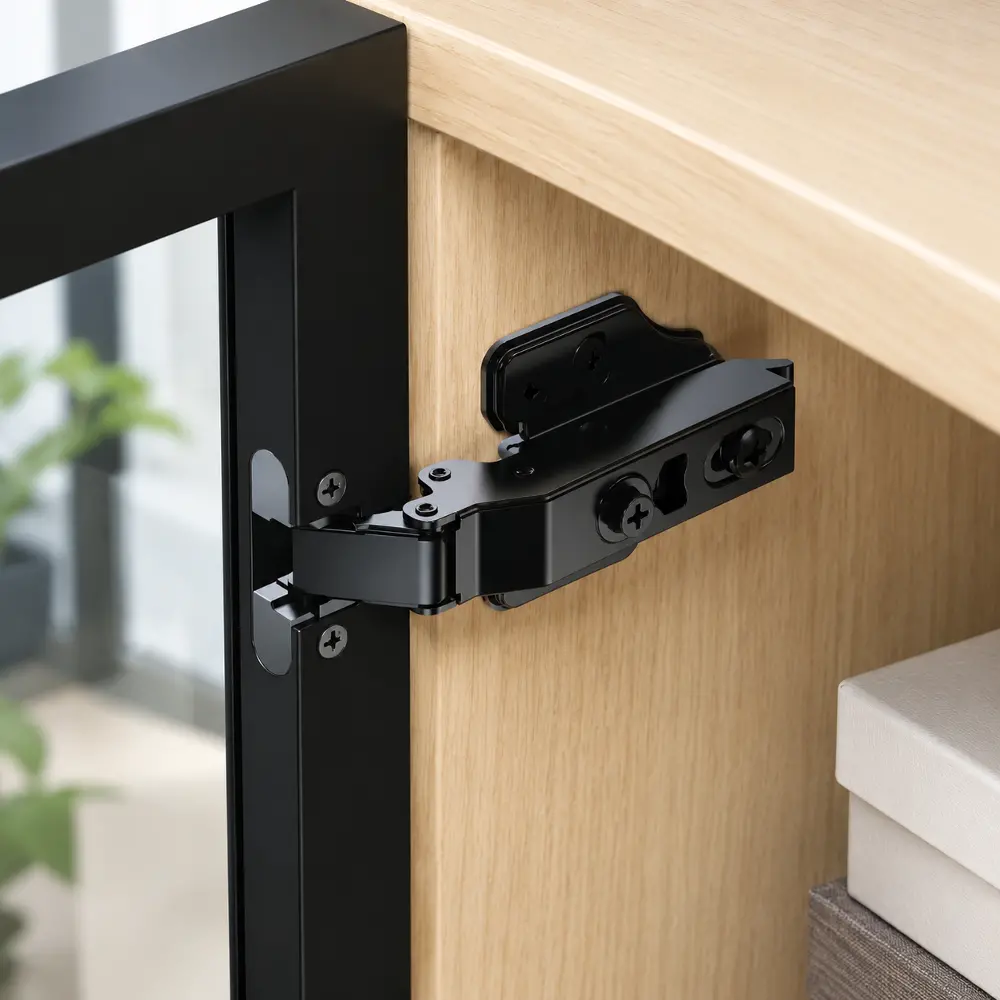
Even with a solid grasp of the underlying physics, specific mechanical anomalies can confuse installers. Addressing these edge cases requires applying basic engineering logic to the physical symptoms. We have isolated the most frequent technical inquiries regarding hinge manipulation.
Why does the lateral adjustment screw feel locked?
The lateral cam screw operates within a tightly defined physical range. If the screw refuses to turn smoothly, it has likely reached its maximum rotational limit. Forcing the screwdriver past this hard stop will strip the metal threads or permanently bend the internal cam mechanism.
If you reach the limit but the door still requires movement, the initial mounting plate installation is flawed. You must physically detach the mounting plate from the cabinet wall and relocate it. The adjustment screws are designed for millimeter-precise tuning, not for correcting large structural mounting errors.
Can thick doors operate on standard hinge joints?
A standard hinge is engineered to accommodate door thicknesses ranging from 14 to 22 millimeters. Panels exceeding 22 millimeters alter the center of gravity and the required swing clearance. A thick panel will strike the adjacent door before reaching a fully open position.
Operating outside this specified thickness range requires changing the hinge geometry entirely. You would need specialized thick-door hardware with a different articulation path. Attempting to force standard hinges to swing a heavy 30mm slab will rapidly destroy the cup bore.
For us, operating a facility with decades of independent manufacturing experience reinforces a basic engineering truth. Managing the production from raw material stamping to pressure casting internally guarantees exact mechanical tolerances. Reliable adjustment mechanisms rely heavily on this strict material processing. Users depend on this consistency when fine-tuning heavy residential cabinetry installations.
The Role of Clip-on Installation Mechanics
Traditional hardware requires you to hold a heavy wooden panel in mid-air while simultaneously driving a tiny screw into a dark cabinet. This outdated slide-on method often results in stripped screw heads and damaged wood veneer. It also makes achieving initial alignment incredibly difficult.
A clip-on installation mechanism completely segregates the mounting process from the adjustment process. You attach the mounting plates to the cabinet wall independently. You then press the hinge cups into the doors flat on a workbench, ensuring perfect 90-degree alignment without fighting gravity.
Once both components are securely fastened, the installation becomes a simple mechanical snap. The hinge arm hooks over the front bar of the mounting plate. Pushing the rear of the arm downward engages a heavy steel spring, locking the components together with an audible click.
This separation of tasks prevents the adjustment screws from being compromised during the initial heavy lifting. The factory-neutral settings remain intact until you intentionally apply a screwdriver. This simplifies the assembly process for both high-volume furniture manufacturers and individual fabricators.
When it comes time to clean or repair the cabinetry, the clip-on mechanism allows for rapid disassembly. A hidden release lever at the rear of the arm disengages the locking spring. The door detaches instantly without requiring you to alter your carefully calibrated 3D adjustment settings.
Final Calibration Techniques for Seamless Operation
Achieving a flawless installation requires patience and an understanding of how adjustments interact. Changing the lateral position on the top hinge slightly alters the required depth setting on the bottom hinge. The entire door operates as a single, interconnected geometric plane.
Always begin your calibration phase by securing the vertical height first. Ensure the horizontal reveals across the top of the doors match perfectly. Once gravity is managed, proceed to the depth adjustment to establish a uniform gap along the cabinet face.
Save the lateral side-to-side adjustments for the final step. This axis requires the most precise visual tuning to balance the gaps between neighboring doors. Execute these final rotations in quarter-turn increments, testing the swing path after every single movement.
Knowing how to adjust cabinet door hinges elevates a basic installation into a precise structural assembly. Mastering these mechanical forces ensures your hardware operates smoothly without degrading the underlying wooden framework. The longevity of your cabinetry relies directly on the accuracy of these final adjustments.
CONTACT US


GuangDong JinLi XiangXing Precision Metal Manufacturing Co., Ltd.
We are always providing our customers with reliable products and considerate services.
If you would like to keep touch with us directly, please go to contact us
-

Home
-

Tel
-

Email
-

Contact