
Mechanics of Maintenance: How to Clean Cabinet Door Hinges and Prevent Metal Degradation
- By:
- Date:2026/09/21
Homeowners often overlook the hidden mechanical systems operating silently behind their woodwork. Learning exactly how to clean cabinet door hinges extends beyond mere visual aesthetics. It represents a fundamental defense against mechanical degradation. Dust and grease act as abrasive compounds.
When microscopic debris enters the articulation joints, it accelerates metal wear. The friction generated during thousands of closing cycles inevitably compromises the hardware. Understanding the engineering physics behind these components clarifies why routine maintenance is strictly necessary.
Many people only notice their hardware when a door begins to sag or emit a grinding noise. By that point, significant mechanical wear has already occurred. Early intervention preserves the internal mechanisms and maintains the intended acoustic profile of the room.
The Physics of Grime Accumulation on Metallic Hardware
Kitchen environments generate invisible aerosolized cooking oils that travel via thermal air currents. These micro-droplets cool and solidify rapidly upon contact with cold metallic hardware. This thermal exchange creates a thin, polymerized layer of organic material.
Airborne particulate matter, including textile fibers and skin cells, subsequently adheres to this lipid layer. Over several months, this mixture forms a surprisingly dense sludge. This biological concrete fills the micro-tolerances within the pivoting metal arms.
Capillary action draws this accumulated sludge deeper into the structural gaps. The constant opening and closing of the door acts as a rudimentary pump. It forces the abrasive paste directly into the most sensitive mechanical friction points.
Once inside the primary pivot points, the grit acts like liquid sandpaper. It slowly grinds away the protective surface plating during every single articulation. This microscopic structural damage eventually exposes the vulnerable core metal underneath.
Diagnostic Steps Before Initiating Maintenance
Before applying any solvents, you must assess the structural integrity of the hardware system. A thorough visual inspection reveals the difference between surface contamination and deep material failure. Attempting to clean structurally compromised metal is entirely counterproductive.
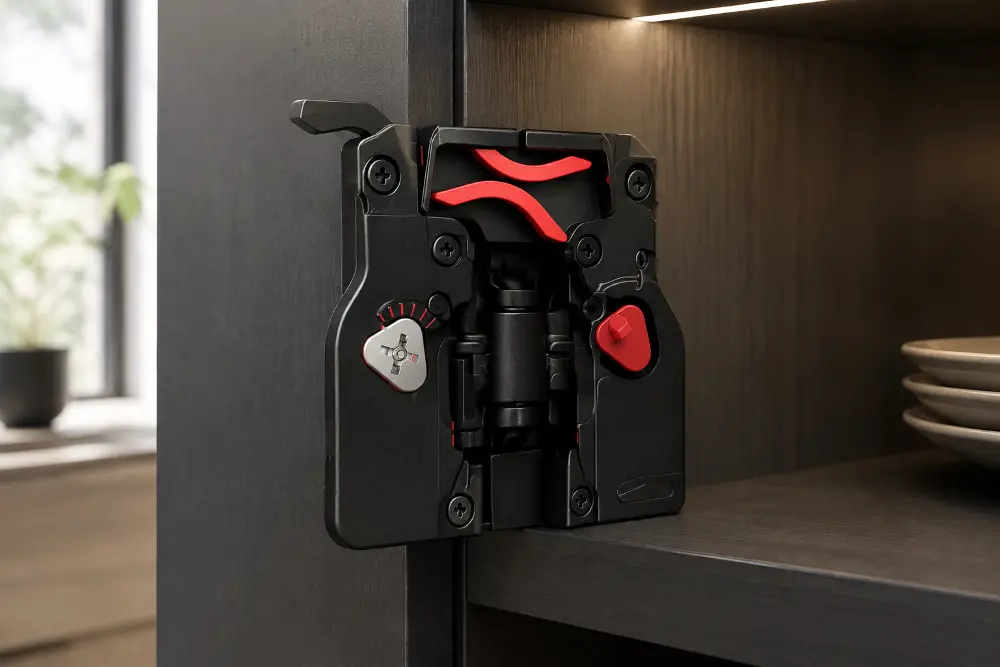
You should look for specific indicators of failure before proceeding. Check for red or orange oxidation blooming around the primary adjustment screws. Listen for sharp, scraping sounds that suggest the internal bearings have already collapsed.
Examine the mounting plate attached to the frame. If the screws are pulling away from the wood, cleaning will not solve the underlying geometric stress. The hardware must be securely anchored for the kinematics to function correctly.
Identifying the specific plating material determines your chemical approach. Bare steel requires completely different handling than advanced layered coatings. Modern high-end hardware typically utilizes complex multi-layer plating to resist environmental moisture.
Chemical Interactions: Choosing the Right Solvents
Selecting a cleaning agent requires basic knowledge of surface chemistry. Using the wrong fluid can permanently destroy the protective barrier of the metal. Aggressive chemicals strip away essential industrial coatings in minutes.
A highly acidic liquid, such as undiluted white vinegar, presents significant risks. Acids attack basic metallic bonds and can etch the microscopic surface of nickel plating. This etching creates microscopic pits where future moisture will accumulate.
Alkaline solutions also pose hidden dangers to internal fluid dynamics. Heavy industrial degreasers can penetrate the sealed hydraulic cylinders of soft-closing mechanisms. This chemical intrusion destroys the specific viscosity of the internal damping fluid.
To guide your selection, consider the following chemical interactions:
- Isopropyl Alcohol (70%): A neutral, rapidly evaporating solvent safe for surface lipids.
- Diluted Mild Dish Soap: Gentle alkaline action suitable for breaking down organic grease without etching.
- Citrus-Based Solvents: Effective on heavy grease but requires immediate neutralization with pure water.
- Ammonia Glass Cleaners: High risk for tarnishing protective metal finishes over repeated applications.
The Step-by-Step Methodology: How to Clean Cabinet Door Hinges
Executing this maintenance requires isolation of the hardware. Attempting a deep clean while the door hangs vertically gravity forces dirty solvents directly into the bottom joints. You must alter the orientation for effective results.
Modern systems feature an any-click system design with a one-shaped plane base. This engineering allows you to detach the entire door simply by pressing a release trigger. Removing the door provides unimpeded access to both the hinge body and the mounting plate.
Once detached, lay the door on a flat, padded surface. Begin by utilizing a soft-bristled brush to aggressively dislodge dry particulate matter. Removing the loose dust first prevents you from creating a muddy smear when liquids are introduced.
Apply your chosen mild solvent to a microfiber cloth rather than spraying the hardware directly. Direct spraying risks fluid pooling inside the recessed cup drilled into the wood. Excess moisture trapped against the engineered wood core causes irreversible swelling.
Work the damp cloth into the structural crevices of the metal arm. For tight geometries around the adjustment screws, a wooden toothpick wrapped in microfiber provides excellent precision. Avoid using hardened steel tools, which can scratch the protective surface.
Re-lubrication Mechanics After Solvent Exposure
Effective degreasing eliminates both harmful sludge and beneficial factory lubrication. Leaving stripped metal entirely dry guarantees immediate friction damage during the next operational cycle. You must replace the boundary layer of lubrication intentionally.
Standard water displacement formulas, commonly found in aerosol cans, are essentially volatile solvents. They evaporate quickly and leave behind almost zero protective film. Using them as a long-term friction barrier represents a fundamental misunderstanding of their chemical purpose.
You need a high-viscosity barrier that stays in place despite constant gravitational shear. A synthetic dielectric grease or a specialized dry PTFE spray delivers the correct molecular adhesion. Apply this lubrication strictly to the metallic pivot pins.
Modern hardware includes buffer on-off technology that allows users to adjust closing speeds. Keep all external lubricants away from these sealed hydraulic components. External grease attracts dirt, which can compromise the delicate rubber seals of the buffer cylinder.
Resolving 3D Alignment Issues Post-Maintenance
The mechanical agitation of cleaning frequently highlights preexisting geometric misalignments. When thick grease is removed, a previously tight joint may suddenly reveal physical play. You must recalibrate the spatial geometry before reinstalling the doors.
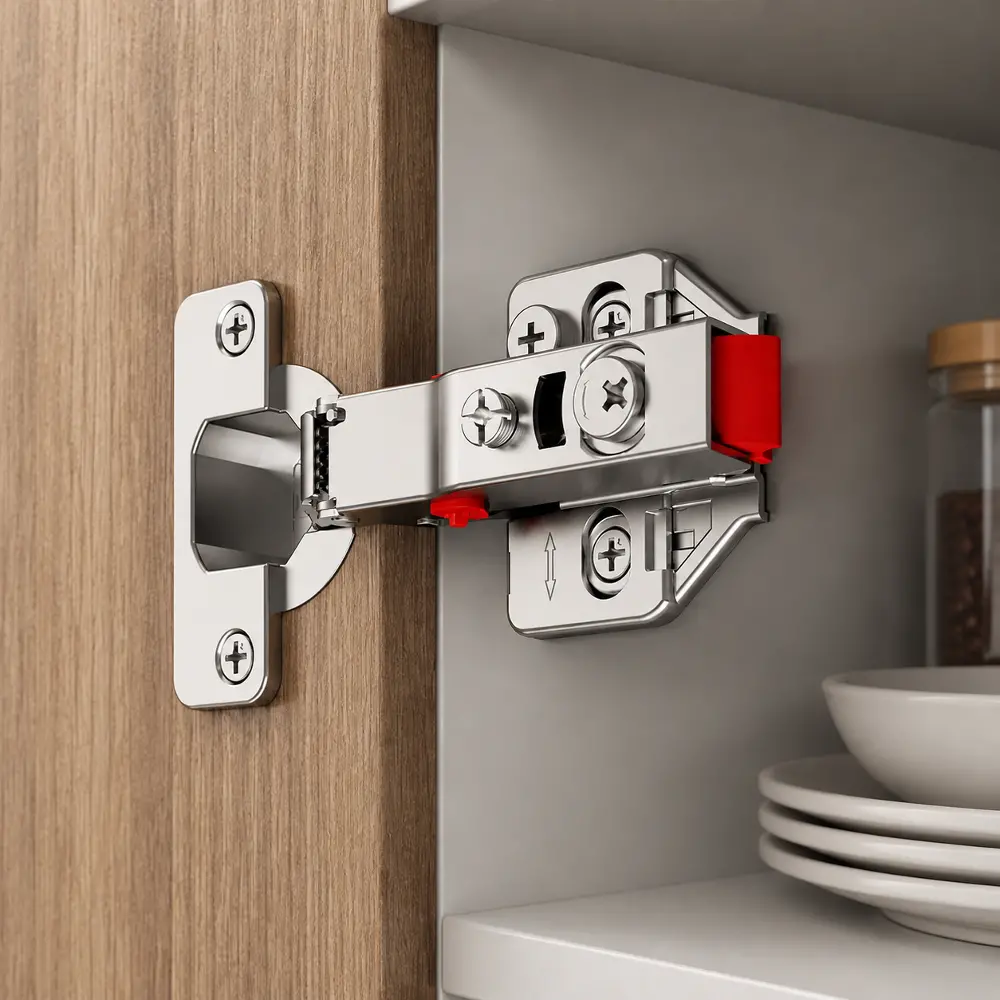
Advanced hardware provides 3D adjustment capabilities across multiple axes. This allows for precise alignment from six different directions without physically relocating the mounting plate. Precision engineering relies entirely on these micro-adjustments for load distribution.
You can manipulate the exact position of the heavy door panel.
- Depth Adjustment: Moves the door closer to or further from the cabinet box.
- Vertical Adjustment: Raises or lowers the door to match adjacent panels perfectly.
- Horizontal Adjustment: Shifts the door left or right to correct uneven center gaps.
Turn the adjustment screws in quarter-turn increments. A minuscule rotation of the threaded screw drastically alters the leverage applied to the heavy wood panel. Test the swinging motion repeatedly after every single micro-adjustment.
Material Engineering and Environmental Resistance
Hardware operates in highly demanding micro-climates. Kitchens generate constant steam, while bathrooms introduce fluctuating levels of extreme humidity. Bare metal cannot survive these rapid atmospheric changes without sophisticated chemical shielding.
For us, operating a 30,000-square-meter facility in the Pearl River Delta, engineering hardware over the past 38 years meant confronting these exact environmental realities. We developed a specific copper-plated nickel-plated manufacturing process to severely delay the onset of oxidation.
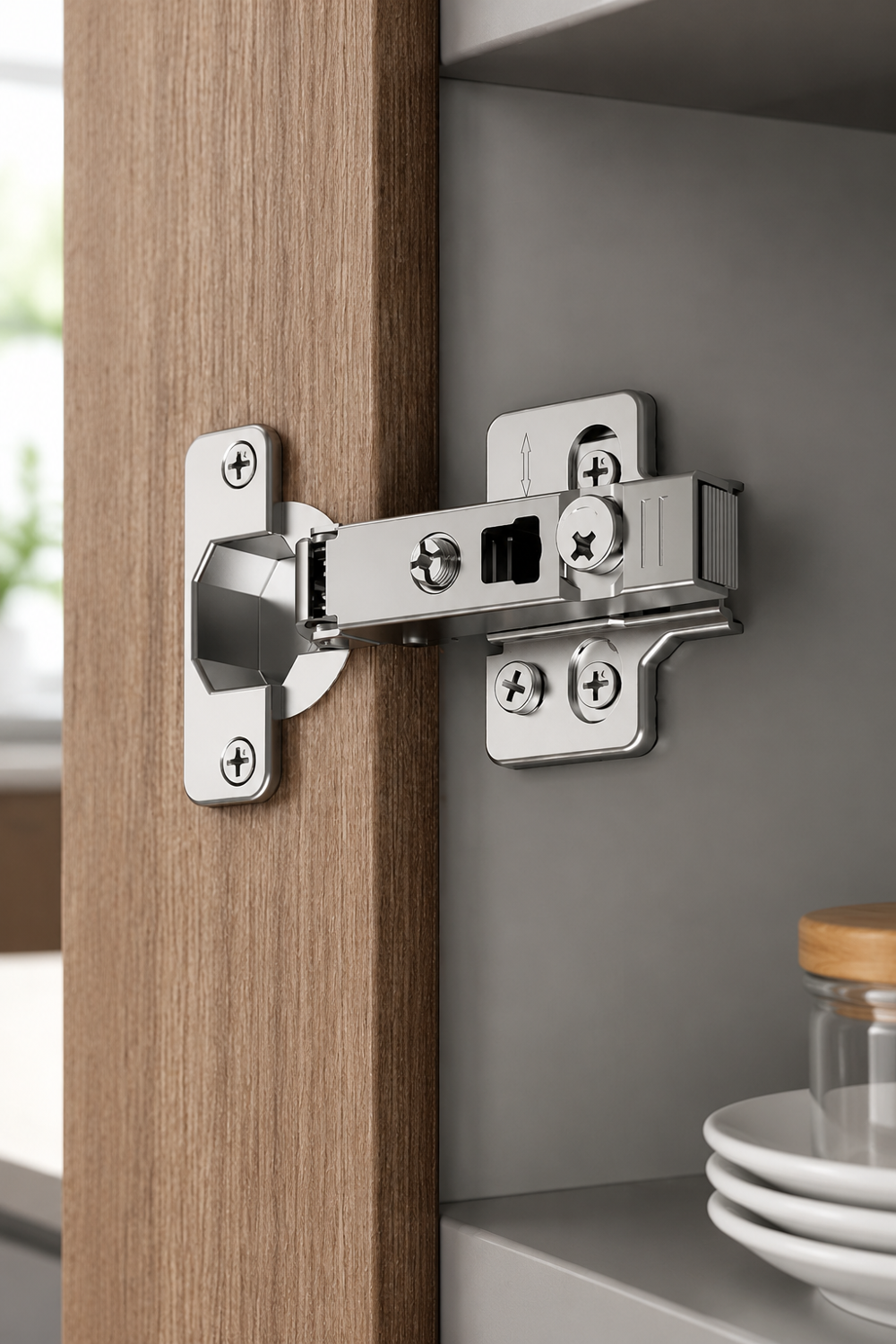
This layered approach utilizes galvanic principles to protect the structural steel. The copper layer provides a highly adhesive bonding surface. The subsequent nickel layer creates an impenetrable barrier against airborne water molecules.
To verify this environmental shielding, components undergo a rigorous 48-hour salt spray test. This accelerated diagnostic simulates years of coastal humidity exposure. Routine cleaning preserves this vital nickel layer, ensuring the salt spray ratings translate to real-world longevity.
Cycle Life and Heavy-Duty Applications
The true measure of a mechanical joint is its endurance under repetitive dynamic loading. A high-quality component is engineered to exceed 80,000 closing cycles. This metric assumes the internal geometry remains free of abrasive contamination.
When dirt alters the friction coefficient, the cycle life drops exponentially. The motor force required to pull the door shut increases, putting immense strain on the mounting screws. Proper cleaning directly protects this long-term cycle life.
For large-scale residential projects or solid wood doors, the mass of the panel magnifies every mechanical inefficiency. A clean, well-lubricated pivot joint distributes this kinetic energy smoothly. Ignoring maintenance on heavy doors inevitably leads to catastrophic structural failure.
Manufacturing processes strictly adhering to Euro E1 quality standards ensure formaldehyde emissions remain strictly limited to below 0.1 ppm. When you clean these components, you aren’t fighting degrading lead or toxic chemical shedding. You are simply maintaining a clean, highly engineered mechanical system.
Frequently Asked Questions on Hardware Maintenance
Q: Can I use olive oil to lubricate a squeaky joint?
A: Organic cooking oils are entirely unsuitable for mechanical lubrication. They oxidize rapidly upon exposure to air, becoming rancid and highly adhesive. This stickiness actively attracts airborne dust, quickly accelerating the exact mechanical degradation you are trying to prevent.
Q: Why does my soft-close mechanism stutter after I clean it?
A: Stuttering indicates that fluid or particulate matter has breached the hydraulic damping cylinder. If you sprayed aggressive solvents directly into the hardware, you likely compromised the internal pressure seal. This permanently alters the fluid dynamics of the damper.
Q: How often is this deep cleaning process mathematically necessary?
A: Frequency depends heavily on the atmospheric conditions of the room. A residential kitchen with frequent high-heat frying requires maintenance every six months. Standard wardrobe systems or dry commercial cabinetry can easily operate safely for two to three years between cleanings.
Q: Do I need to remove the mounting plate from the wooden frame?
A: Removing the structural screws that anchor the base plate is highly discouraged. Repeatedly driving screws into the same wood fibers destroys the structural thread grip. You should only utilize the quick-release mechanism to remove the main hinge body.
The True Value of Mechanical Stewardship
Consistent maintenance directly dictates the functional lifespan of your interior hardware. Ignoring the steady accumulation of household debris mathematically guarantees premature mechanical failure. Your intervention interrupts a very predictable timeline of metal fatigue and friction damage.
By understanding the physics of contamination and the chemistry of safe solvents, you protect your architectural investments. Routine care preserves both the structural alignment and the fluid acoustics of your living space. Knowing precisely how to clean cabinet door hinges ensures your engineered hardware continues performing silently for decades.
CONTACT US


GuangDong JinLi XiangXing Precision Metal Manufacturing Co., Ltd.
We are always providing our customers with reliable products and considerate services.
If you would like to keep touch with us directly, please go to contact us
-

Home
-

Tel
-

Email
-

Contact