
Cabinet Hinges Explained: Types, Fit, Features, and How to Choose
- By:
- Date:2026/11/02
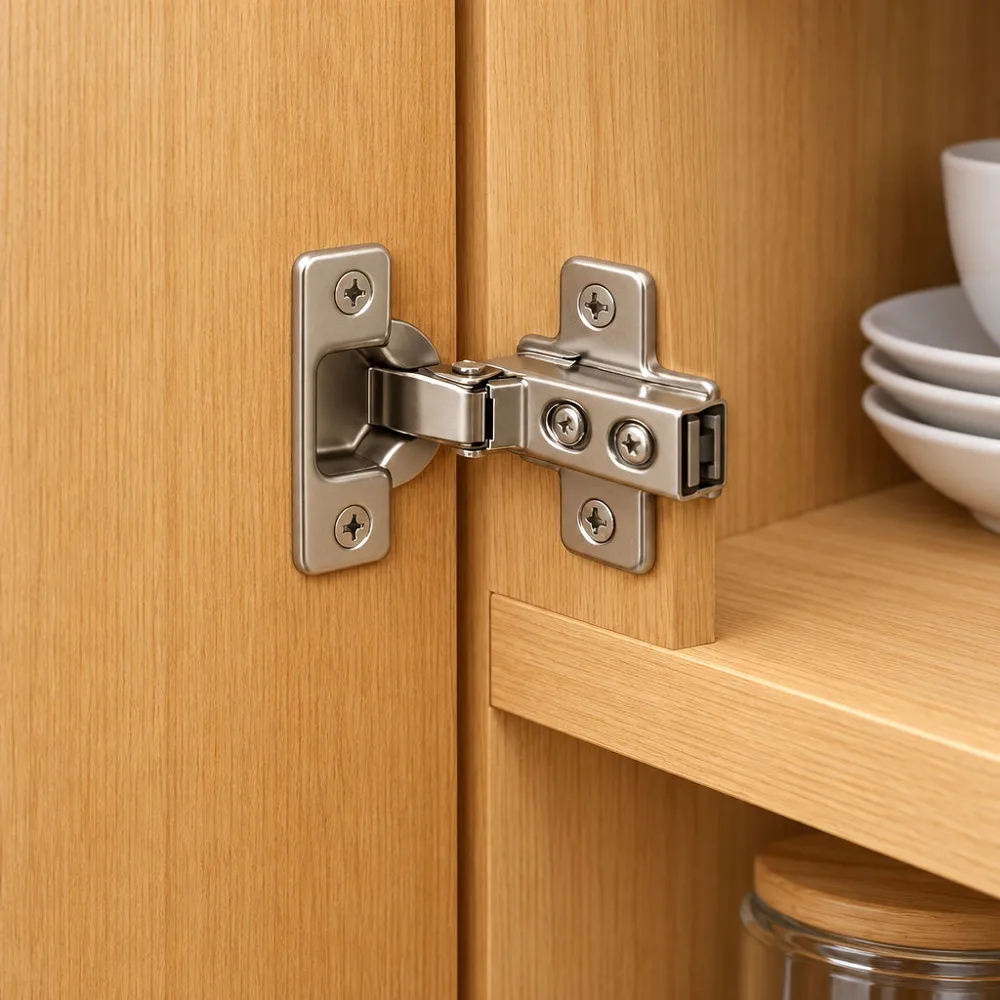
A misaligned cabinet door is an immediate visual annoyance, yet the hardware behind its movement is often misunderstood. When homeowners, renovators, and carpenters look for cabinet hinges explained in plain terms, they usually meet a thicket of geometry, load ratings, and mechanical jargon instead. The hinge you choose decides whether a door closes cleanly against the frame or starts to sag under its own leverage within a year.
Cabinet door hinge systems act as the mechanical joints of cabinetry, carrying dynamic loads across thousands of open-and-close cycles. Once you understand how these components mount, pivot, and adjust, a frustrating renovation task becomes a predictable one.
How Cabinet Hinges Work and Core Terminology
Every working hinge balances load transfer against pivot geometry. Strip away the finish and you find a mechanism built to carry the door’s weight while guiding it through a controlled swing arc.
Anatomical Components of Modern Hinges
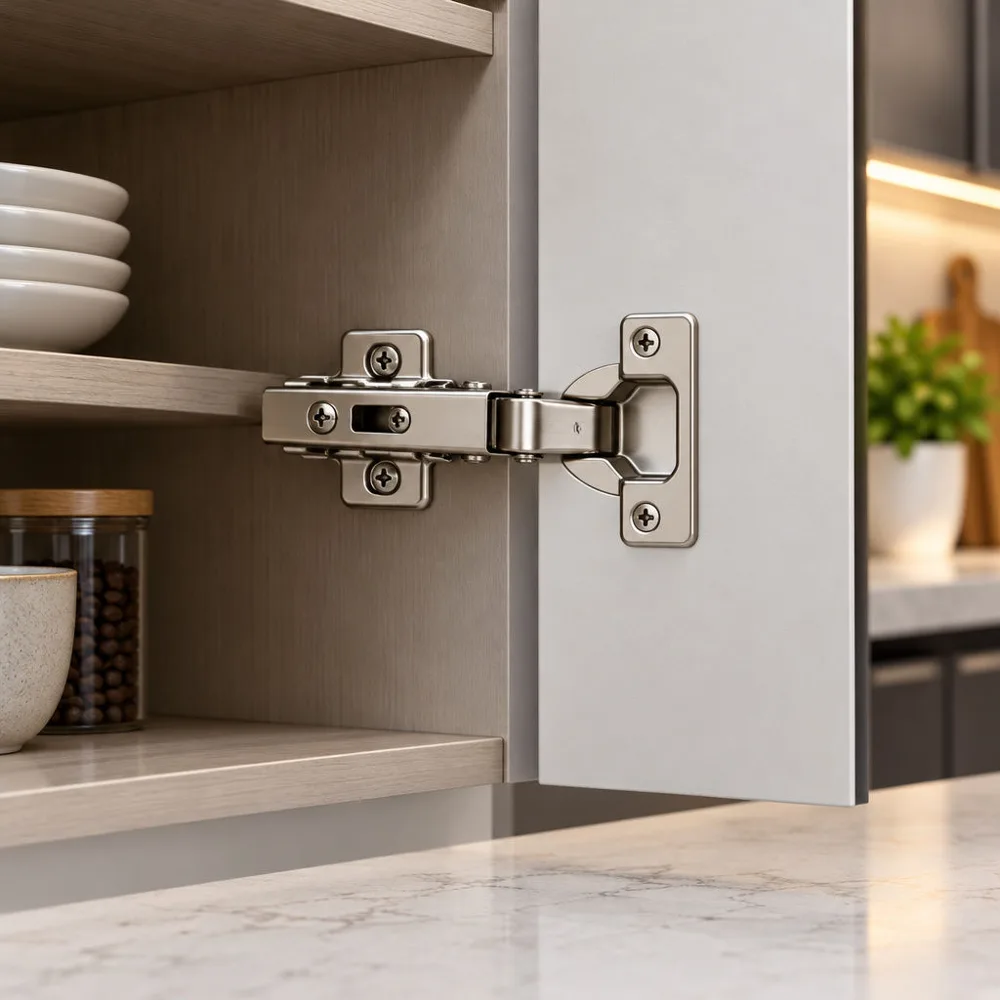
A modern concealed hinge assembly has three connected parts that work together. The hinge cup sits in a round pocket bored into the back face of the door.
Connected to this cup is the hinge arm, which holds the linkages, spring, and adjustment screws. The arm attaches to the mounting plate, and the mounting plate fastens to the cabinet side panel or face frame.
Concealed vs. Exposed Hardware
Concealed hinges, often called European hinges, sit fully inside the cabinet when the door is closed. They leave clean exterior lines, which is why they appear so often in minimalist kitchens and contemporary casework.
Exposed and semi-concealed hinges leave barrels, knuckles, or decorative tips visible from the outside. Basic butt hinges offer little built-in adjustment, so correcting alignment may require repositioning or shimming them. Adjustability varies by design, though. Some semi-concealed and face-frame hinge models include slotted or screw-based adjustment, so check the specific product before assuming either way.
Mechanism Distinctions: Self-Closing, Soft-Close, and Free-Swing
The closing mechanism separates basic pivots from modern functional hardware. Free-swing hinges rotate without resistance, so they are often paired with a magnetic or roller catch when the cabinet needs a separate device to hold the door closed.
Self-closing hinges add an internal spring that pulls the door shut once it passes a certain closing angle. Many soft-close hinges pair that spring with a hydraulic damper, which slows the door near the end of its travel so it does not slam.
Cabinet Construction and Door Position Compatibility
The way your cabinet boxes are built limits which hinge styles can mount to them. Ordering a hinge designed for the wrong box construction is a common and avoidable mistake in cabinetry projects.
Face-Frame vs. Frameless (Euro-Style) Cabinets
Face-frame cabinetry, common in traditional North American construction, has a solid hardwood frame around the front of the box opening. Face-frame hinges attach either to the narrow front edge of that frame or wrap slightly around its back face.
Frameless construction, often called Euro-style cabinetry, uses particleboard or plywood boxes whose side panels form the front edge. Hinges for frameless cabinets fasten to the inside of the side walls, often using system hole spacing drilled during manufacture.
Understanding Door Geometry: Full Overlay, Half Overlay, and Inset
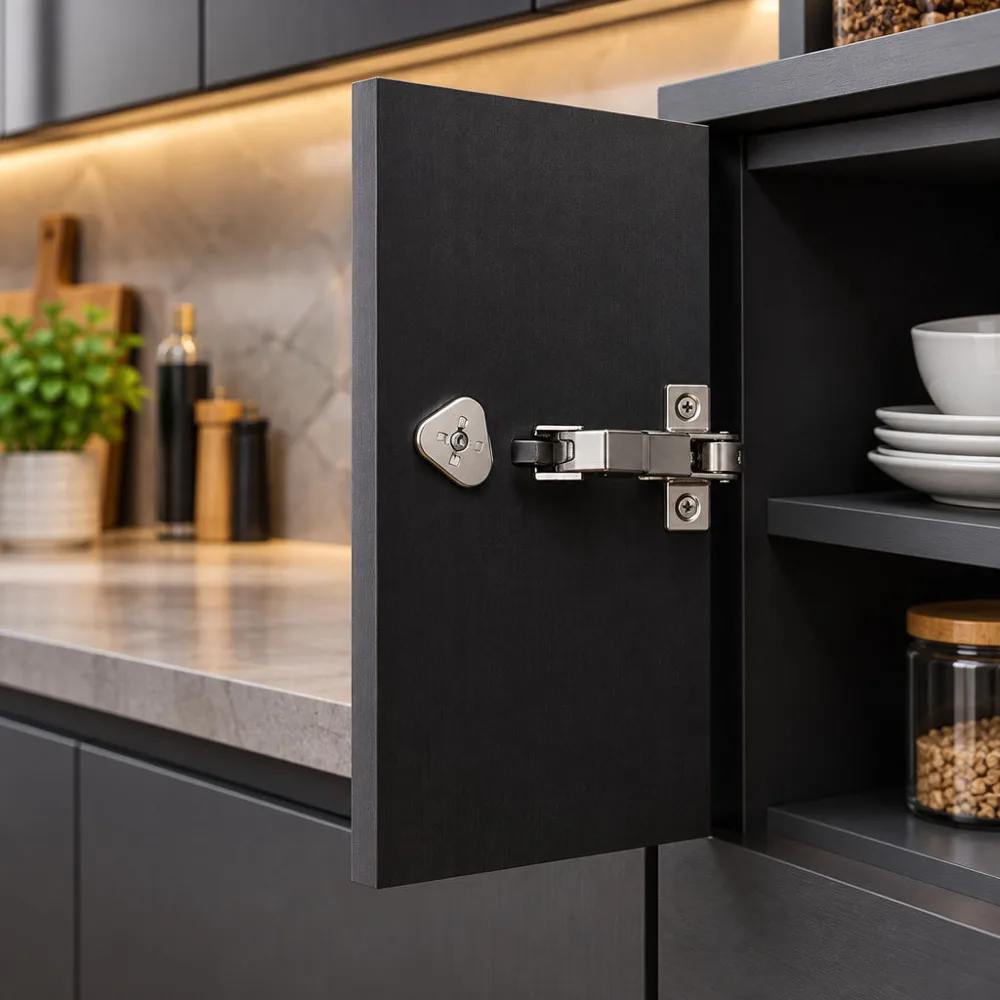
The door’s position relative to the cabinet opening sets the overlay requirement and the shape of the hinge arm. Full overlay doors sit over the cabinet opening and cover most or all of the box edge or frame.
Half overlay applies where two doors share a single central partition, with each door covering part of that divider. Inset doors sit inside the cabinet opening, flush with the front, and need a hinge arm designed specifically for inset mounting so the door clears the frame as it swings.
Accurate Measurement: Determining Door Overlay and Gap Tolerances
Overlay is the distance the closed door overlaps the edge of the cabinet opening. To measure it, close the door, put masking tape on the frame next to the hinge edge, and mark a pencil line along the door’s edge.
The distance from that line to the edge of the opening is your overlay figure. Gaps between neighbouring doors, and between a door and the frame, depend on the hinge model, door thickness, and edge profile. Follow the hinge maker’s application chart, which lists the minimum clearance needed for a given door and hinge, so the edges do not bind as the door opens.
Common Types of Cabinet Hinges
Hardware manufacturers make many hinge geometries, each suited to a joinery method and look. Picking the right category first narrows the choice to hinges that will actually fit your cabinets.
Concealed Cup Hinges (European Hinges)
The 35-millimeter concealed cup hinge is the most familiar type in contemporary cabinet making. It seats into a round pocket bored in the back of the door and keeps its adjustment screws hidden from view.
Its multi-pivot linkage moves the door slightly outward as it opens. That motion helps the door edge clear the cabinet frame and neighbouring doors, which allows tight gaps between panels.
Traditional Butt, Surface-Mount, and Semi-Concealed Hinges
Traditional butt hinges consist of two metal leaves joined by a central pin, often mortised flush into the door edge and frame. They suit period furniture, though basic butt hinges offer little built-in adjustment for correcting settling or seasonal wood movement once installed.
Surface-mount hinges screw straight onto the face of the door and frame without mortising, which keeps installation simple for utility storage. Semi-concealed hinges hide one leaf behind the door while leaving the knuckle and a frame plate visible from the room.
Specialty Configurations: Corner, Bi-Fold, and Specialized Openings
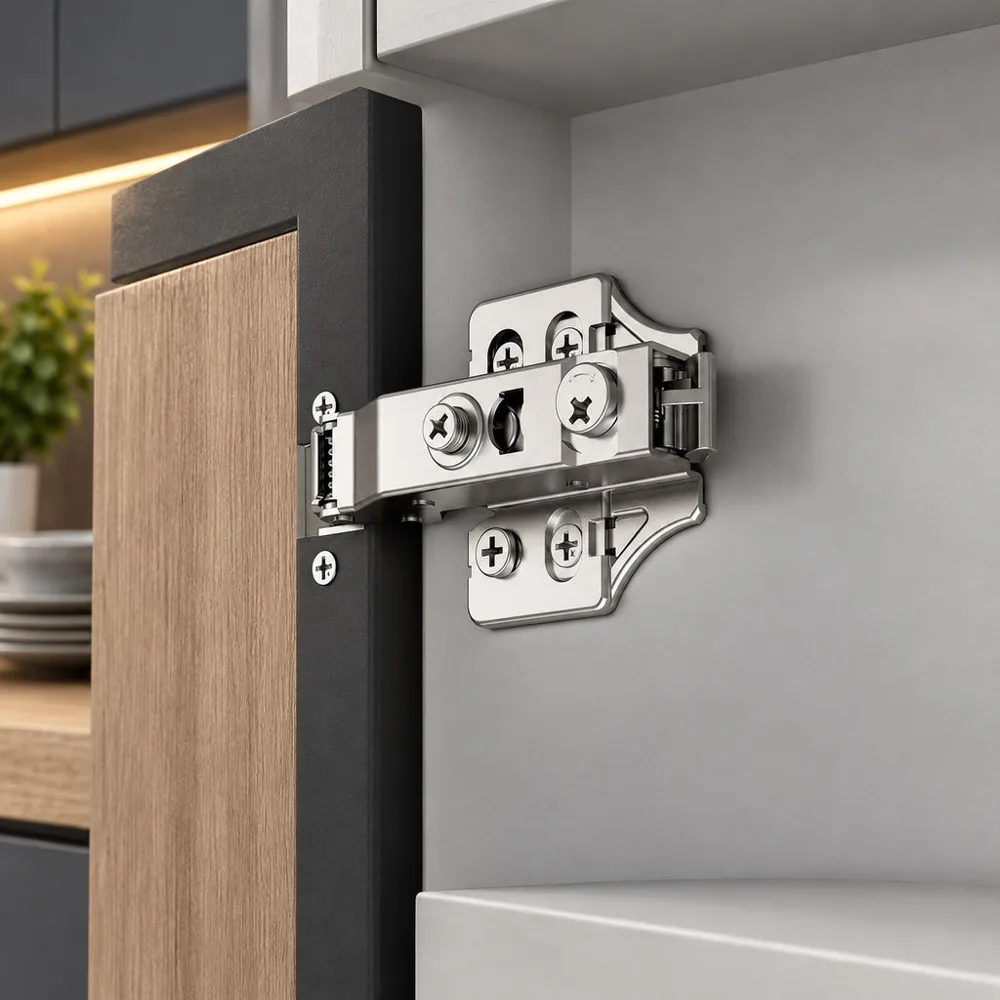
Corner cabinets, angled units, and pie-cut Lazy Susans need hinges with non-standard angles. Pie-cut corner doors use bi-fold hinges that join two door panels, so both swing open together as one folding unit.
Blind corner cabinets need hinges that mount to an interior partition set parallel to the closed door. Angled mounting plates or hinges handle cabinets set at other angles, such as those in custom angled layouts.
Features That Determine Daily Functionality and Longevity
A hinge works as a small mechanical bearing that takes repeated load and sits in whatever humidity the room produces. A few features decide how well it handles both.
Integrated Damping and Closing Velocity Control
Many soft-close hinges use a small hydraulic damper in the hinge cup or arm, though the exact mechanism depends on the hinge design. In a hydraulic design, the damper engages as the door nears the closed position and slows it so it comes to rest quietly.
Some hardware systems include a buffer on-off switch. It lets installers or homeowners turn off the damping on one hinge of a small, light door, so the door does not close too slowly.
Opening Angles, Clearance, and Hinge Articulation
A hinge’s opening angle controls how much of the cabinet interior you can reach. Hinges in the range of roughly 95 to 110 degrees are common product options and suit many shelving layouts.
Roll-out trays and pullout baskets are a different case, because a partly open door can block them. Wide-angle hinges, offered in options such as 155 or 165 degrees, are one way to swing the door further clear. Check the hinge’s opening-angle and clearance drawings against the width of the pullout before ordering.
Multi-Axis Alignment: 3D Adjustment Mechanisms
Buildings settle and solid wood doors move with seasonal humidity, so cabinet doors drift out of line over time. Many concealed hinges handle this with 3D adjustment built into the hinge arm and mounting plate.
3D adjustment means three axes, each adjustable in either direction:
- Side-to-side adjustment: Moves the door left or right to even out the vertical gaps between neighbouring doors.
- Height adjustment: Moves the door up or down so the top and bottom edges line up across a run.
- Depth adjustment: Moves the door toward or away from the cabinet box so it closes evenly against the bumpers.
Material Substrates, Plating, and Corrosion Resistance
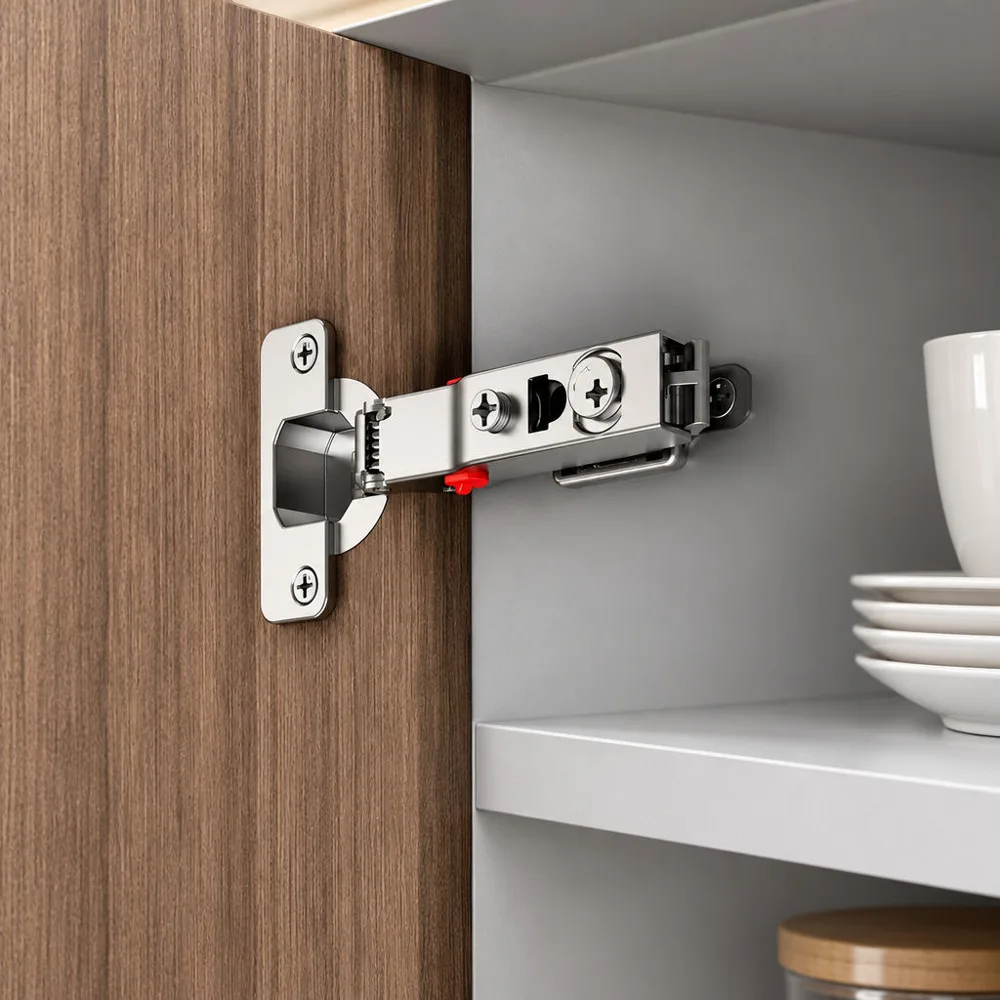
Bathroom vanities, laundry rooms, and basement storage expose hardware to higher humidity. Steel hinges without an adequate protective coating can corrode, and rust on springs and pivots makes the hinge stiff.
Plating is the usual defence. One approach uses a copper layer under a nickel-plated finish. Suppliers often publish salt spray test durations for their finishes. The product data in the spotlight below cites a 48-hour salt spray test for selected models, which is useful for comparing options when moisture is a concern.
A Practical Selection Framework
Choosing hardware without a checklist leads to re-orders and patched holes. With cabinet hinges explained part by part above, the steps below put them in buying order.
Step-by-Step Selection Decision Flow
- Examine Cabinet Construction: Identify whether the boxes are frameless or have a hardwood face frame.
- Determine the Door Position: Confirm whether the doors are full overlay, half overlay, or inset.
- Establish Clearance Requirements: Check whether the open door must clear pullout baskets, wall mouldings, or appliances, then compare that against the opening angle and clearance drawings for the hinges you are considering.
- Choose the Closing Behaviour: Decide between self-closing, push-to-open, or hydraulic soft-close hinges.
- Confirm Boring Pattern Geometry: Measure the existing cup diameter, cup position, and mounting-hole spacing, then compare them with the exact replacement hinge’s drilling diagram.
Door Dimensions, Weight Ratings, and Hinge Count Calculations
The number of hinges a door needs depends on its weight, height, and width. Wide doors put more leverage on the top hinge, so they need more support than their height alone suggests.
Determining the correct hinge count requires the load chart published for the specific hinge model you are buying. Those charts account for door dimensions, panel weight, and the hinge’s rated capacity. Using a chart from a different hinge or a generic sizing guide can lead to under-supporting heavy doors or over-engineering light ones. For final count and spacing, always refer to the exact manufacturer’s published data.
Comprehensive Hardware Comparison Matrix
| Hinge Category | Exterior Visibility | Primary Cabinet Fit | Adjustment After Installation | Common Installation Challenge |
|---|---|---|---|---|
| Concealed Cup (Euro) | Hidden when closed | Frameless and face-frame | Usually three-axis (side-to-side, height, depth) | Requires an accurately bored 35mm cup pocket |
| Traditional Butt Hinge | Visible barrel | Face-frame / inset | Basic models offer little built-in adjustment | Needs accurate mortises on door and frame |
| Semi-Concealed Hinge | Frame leaf visible | Face-frame overlay | Varies by model; some offer slotted adjustment | Old screw holes may show if the hinge is changed |
| Pivot Hinge | Small top and bottom pins | Inset doors | Limited, often via slotted mounts | Mortising at the top and bottom of the door |
Installation, Alignment, and Common Troubleshooting
Good installation follows a fixed sequence. Accurate hole placement, careful fastening, and orderly adjustment afterwards decide how long the hinge stays aligned.
Pre-Installation Layout and Cup Hole Drilling
For 35mm concealed cup hinges, the distance from the door edge to the edge of the cup hole matters a great deal. It affects the overlay and the gap between doors, and it is specific to each hinge model.
Take the cup position and drilling depth from the drilling diagram for the exact hinge you are installing. Use a 35mm Forstner bit with a depth stop set to that figure, so the bit cannot break through the face of the door. Drill straight, because a tilted cup puts uneven load on the hinge linkage.
Systematic 3D Door Alignment Protocol
Aligning a run of cabinet doors works best when you adjust in a set order. Turning screws at random tends to push one hinge out of line while you fix another.
- Set the Height: Loosen the height screws on the mounting plates. Move the door up or down until its top and bottom edges line up with the run, then retighten the screws.
- Set the Depth: Turn the depth screw on each hinge arm. Move the door toward or away from the cabinet until it closes evenly against the bumpers.
- Set the Side-to-Side Gap: Turn the side adjustment screw on each hinge. Adjust both hinges evenly until the vertical gaps between neighbouring doors are straight and equal.
Diagnosing Common Hinge Failures and Door Misalignment
When a door sags, a common cause is stripped screw holes in particleboard. If the material crumbles, remove the plate, glue hardwood dowels into the holes with PVA wood glue, let it cure, and drill new pilot holes.
If a soft-close hinge starts slamming, check the damper for oil leaks or damage. Hydraulic dampers generally cannot be refilled, so a failed one means replacing the damper or the hinge.
Product Spotlight: Professional Furniture Cabinet Door Hinges
For us, the background starts with Xiangxing, founded in 1987 in Jinli Town, Gaoyao City, Guangdong Province, an area known in China as a home of hardware. The company runs a 30,000-square-meter factory where stamping, forming, pressure casting, injection molding, assembly, and packaging are done in-house, and it states that it passed ISO 9001:2000 quality management certification in 2000. KEAX, supplied by the company, lists the Professional Furniture Cabinet Door Hinge specifications described below.
Damping and Mounting Design
The supplier states that it developed two-way soft closing hinges in 2011. According to the supplier, the design combines a regular soft-close hinge with a two-way hinge to address base loosening and door shift after long use.
The KEAX product listing describes an any-click system design with a one-shaped plane base for quick mounting. In practice, a clip-on base lets installers attach the hinge arm to a pre-fitted mounting plate and remove it again without unscrewing the plate.
Adjustment and Durability Data
Accurate alignment matters in fitted wardrobes and kitchen runs, where gaps are easy to see. The product data describes 3D adjustment that allows door alignment from six directions after installation, which corresponds to the three axes above, each adjustable both ways.
According to the supplied product data, specific models are tested to exceed 80,000 closing cycles and to withstand a 48-hour salt spray test. The listing also states a copper-plated, nickel-plated finish, and says manufacturing processes and raw materials follow the Euro E1 quality and health standards. The buffer on-off function described in the listing lets users adjust closing speed to suit the door.
Application Scenarios Across Modern Living Spaces
The product listing names several intended applications:
- Modern Kitchen Cabinetry: Doors that open many times a day and benefit from soft closing.
- Bathroom Vanity Units: Humid rooms where a plated finish and salt spray data help with comparison.
- Custom Wardrobes and Solid Wood Doors: Larger or heavier panels that rely on 3D adjustment to keep gaps even.
- Large Residential and Commercial Interiors: Projects where a clip-on base can speed up installation across many doors.
Frequently Asked Questions
What is the exact difference between full overlay and inset cabinet doors?
A full overlay door sits on the front of the cabinet box and covers most or all of the box edge or frame. An inset door sits inside the cabinet opening, flush with the front, and needs an even gap on all four sides.
Can I replace an old hinge without changing the mounting plate?
Mounting plates are often not interchangeable between manufacturers, and sometimes not between product generations from the same brand. Clip designs, plate height, and screw positions differ. The safest approach is to fit the mounting plate designed for the replacement hinge.
Why does a soft-close cabinet hinge stop working or slam shut?
A soft-close hinge fails when the damper leaks oil, the spring breaks, or debris jams the mechanism. If the hinge has a buffer on-off switch, check that it was not turned off by accident before replacing the hinge.
How do I fix stripped hinge screw holes in particle board cabinets?
The fix is to restore solid material for the screw. Drill out the stripped hole, glue in a hardwood dowel of matching diameter, and trim it flush once dry before drilling a new pilot hole. Metal hinge repair plates are another option, since they spread the screws over undamaged material.
How many hinges are strictly required for heavy solid wood pantry doors?
The count depends on the door’s height, width, and weight, as well as the hinge model. Tall, heavy pantry doors generally need more than the two hinges used on small wall cabinet doors, often four or more. Use the load and hinge-count chart for your specific hinge to set the final number and spacing.
Conclusion
With cabinet hinges explained from box construction through to adjustment, the choice becomes a sequence of checks instead of guesswork. Confirm whether your cabinets are face-frame or frameless, measure the overlay, match the opening angle to what sits inside the cabinet, and follow the drilling and load charts for the exact hinge you buy. A hinge chosen this way, with 3D adjustment and a closing action that suits the door, keeps gaps even and doors closing quietly for years of daily use.
CONTACT US


GuangDong JinLi XiangXing Precision Metal Manufacturing Co., Ltd.
We are always providing our customers with reliable products and considerate services.
If you would like to keep touch with us directly, please go to contact us
-

Home
-

Tel
-

Email
-

Contact