Hardware Fundamentals: How to Remove Cabinet Door Hinges Across Different Systems
- By:
- Date:2026/09/26
Cabinet systems rely entirely on internal motion hardware to function daily. Understanding how to remove cabinet door hinges is a fundamental skill for interior renovations, hardware upgrades, or basic kitchen maintenance. The mechanical joint connecting a stationary frame to a moving panel bears constant kinetic stress. This load bearing causes eventual wear.
Replacing these metal components requires more than basic manual labor. It demands an understanding of mechanical engineering principles applied to domestic environments. Knowing exactly how to remove cabinet door hinges safely prevents structural damage to the surrounding wood. Poor extraction techniques often destroy delicate mounting holes.
Wood composites possess specific structural vulnerabilities. Particleboard and medium-density fiberboard handle compression well but fail rapidly under sheer tension. Forcing a bound metal joint simply tears the compressed wood fibers apart. A methodological approach preserves the integrity of the storage unit.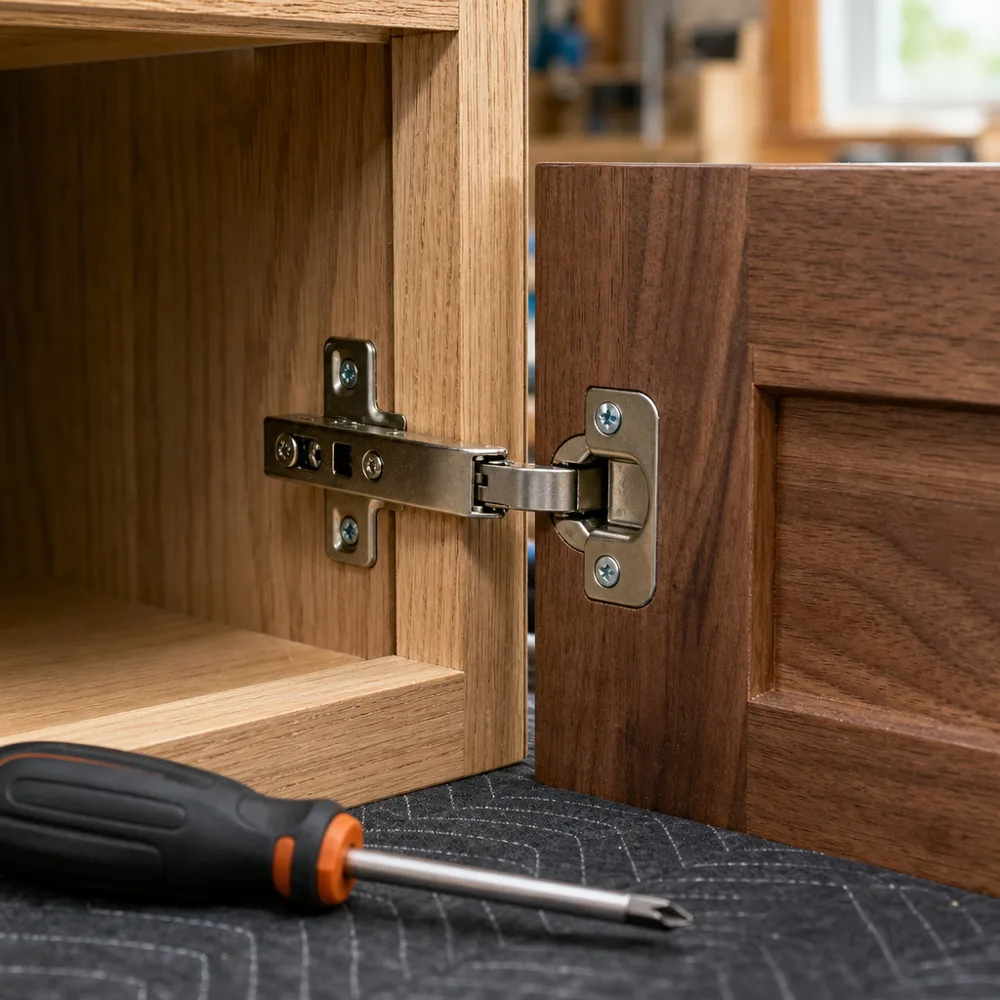
The Mechanical Evolution of Cabinet Hardware
Early domestic storage relied on external forged iron joints. These simple pivot points were heavy, prone to oxidation, and lacked dimensional adjustability. Carpenters had to align wooden doors perfectly during the initial installation phase. Any slight miscalculation resulted in permanent friction between the wooden surfaces.
The post-industrial era introduced concealed articulation systems. European manufacturers developed the internal cup mechanism, allowing the hardware to sit entirely inside the storage unit. This architectural shift transferred the physical load distribution from the outer edge directly into the internal panel wall.
This mechanical shift transformed interior kitchen design forever. Hardware became an invisible kinetic engine rather than a heavy decorative anchor. Independent spatial adjustability across three distinct axes became a baseline manufacturing standard. Recognizing this structural history helps clarify why modern mounting plates function this way.
Identifying Your Specific Hardware Classification
Before attempting any metal extraction, identifying the exact mechanical system is critical. Different architectural regions adopted distinct standards for panel attachment and load distribution. You must categorize your installed hardware to avoid applying incorrect leverage during removal.
The standard concealed cup variation dominates modern residential interiors. These complex units feature a circular metal cup recessed deeply into the wooden panel. This cup connects mechanically to an internal mounting plate. They hide completely from sight when the panel is closed.
Traditional exposed butt variations represent an older functional approach entirely. These feature two flat metal plates connected by a central rotating pin. They mount directly on the outside edge of the wooden frame. They offer maximum weight capacity but zero alignment adjustability.
American face-frame layouts often utilize a unique hybrid mechanical approach. The metal cup sits inside the moving panel, but the main arm wraps tightly around the external wooden frame. This requires a completely different extraction angle compared to frameless European designs.
The Anatomy of Concealed Articulation
Understanding the individual components makes the physical removal process highly intuitive. A standard concealed joint consists of three primary mechanical elements working together. The mounting plate attaches directly to the interior cabinet wall. It serves as the static foundational anchor.
The main articulating arm bridges the gap between the static box and the moving panel. This arm houses the complex adjustment screws and the internal spring mechanism. It dictates the specific opening angle, ranging anywhere from standard right angles to wide panoramic arcs.
The circular hinge cup embeds directly into the moving wooden panel. Manufacturers bore a precise blind hole into the wood to house this metal component. Two secondary screws or expanding plastic dowels secure the cup against the rotational torque generated during opening.
Preparing the Workspace and Selecting Extraction Tools
Hardware extraction requires specific environmental controls and precise manual instruments. Gravity acts immediately against an unsupported wooden panel during the removal process. Failing to control the heavy panel weight leads directly to torn wood fibers.
A standard manual screwdriver remains the safest extraction tool available. Power drills operate at torque levels that easily strip threaded slots in soft particleboard. You should carefully select a driver bit that precisely matches the specific screw head profile.
Support the bottom edge of the moving panel with a stack of heavy books or a dedicated lifting wedge. This simple action removes the downward sheer force from the delicate metal joints. A floating wooden panel reduces kinetic friction on the internal mounting screws.
Keep a designated magnetic tray nearby during the entire operation. Extracted metal components, especially minute depth-adjustment screws, vanish easily in dusty work environments. Losing a proprietary set screw effectively renders the entire mechanical arm completely useless.
Step-by-Step: Extracting Modern Clip-On Systems
The actual separation process varies heavily based on the specific kinetic design. Attempting to pry a locked clip-on mechanism will bend the cold-rolled steel arm permanently. You must read the subtle physical cues of the metal components before applying force.
Reach carefully behind the main metal arm assembly near the cabinet wall. You will feel a small metal lever or hidden push-button near the back edge. Depress this hidden trigger firmly while pulling the wooden door slightly forward.
The entire mechanical arm should release instantly from the static mounting plate. You do not need any tools for this specific separation phase. The door panel will come away freely, leaving only the mounting plates attached to the cabinet wall.
Once the panel is separated, you face the cup extraction process. Place the wooden panel face down on a heavily padded work surface. Use your manual screwdriver to carefully reverse the two screws flanking the circular metal cup. Lift the metal cup straight vertically.
Step-by-Step: Removing Traditional Slide-On Mechanisms
Slide-on mechanisms require a distinctly different approach for safe separation. Locate the single fixing screw positioned nearest to the rear of the cabinet box. Turn this specific screw counterclockwise approximately one full rotation using steady pressure.
Do not extract this rear screw completely from the metal threading. Pull the wooden panel horizontally toward your body, sliding the main arm backward off the mounting track. The mounting plate will remain firmly screwed to the interior wooden wall.
Dealing with the remaining wall plates requires gentle manual extraction. Reverse the primary wood screws holding the plate to the particleboard. If the plate utilizes expanding plastic dowels instead of screws, gently pry the plate upward using a wide putty knife.
Never use a narrow flathead screwdriver to pry plastic dowels from wood. The concentrated pressure point will easily punch through the delicate melamine veneer. Distributing the lifting force across a wide metal blade protects the cosmetic surface from permanent compression damage.
Analyzing Common Structural Failures During Extraction
Mechanical joints installed in humid environments often develop severe micro-oxidation over time. Invisible moisture interacts directly with the microscopic metal threads, binding them permanently to the surrounding wood fibers. Forcing a bound screw causes the driver bit to slip violently.
Stripped screw heads present a massive extraction barrier for homeowners. When the metal driver bit loses purchase, the rotational force simply hollows out the soft metal head. Placing a wide rubber band flat over the damaged slot provides temporary friction for manual turning.
Sometimes the entire static mounting plate pulls loose during the initial separation. Particleboard possesses very low internal tensile strength compared to natural hardwood. Over-tightening during the original factory installation easily crushes the internal wood pulp into dust.
When you remove the damaged metal plate, a crumbling crater of wood remains. Addressing these destroyed mounting holes requires chemical and physical reinforcement. Wooden dowels dipped in standard polyvinyl acetate glue can fill the stripped cavity securely.
Technical Specifications of Cabinet Motion Systems
Understanding the mechanical limits of domestic hardware guides better maintenance practices. The specific geometry of a metal joint dictates how much weight it can bear safely. Exceeding these engineering limits causes immediate structural deflection.
- European Concealed Base: Uses a standard 35mm cup diameter, supports up to 20 pounds per pair, and offers three distinct axes of alignment adjustment.
- Face-Frame Wrap Base: Also uses a 35mm cup but anchors differently, holding around 18 pounds per pair with limited two-way lateral adjustment.
- Traditional Exposed Butt: Requires no cup drilling, supports heavy loads exceeding 30 pounds, but provides zero mechanical alignment capability post-installation.
- Miniature Glass Clamps: Uses a specialized 26mm format with soft plastic inserts, supporting fragile panels under 10 pounds with minimal adjustment options.
Cold-rolled steel serves as the foundational backbone for modern concealed hardware. The industrial cold rolling process increases metal hardness and tensile strength without adding physical bulk. This allows modern manufacturers to stamp complex interlocking geometries precisely.
Zinc alloys occasionally replace heavy steel in specific internal dampening components. Zinc offers superior casting precision for manufacturing tiny hydraulic cylinders. However, raw zinc possesses a lower sheer strength than steel, making it unsuitable for primary load-bearing arms.
Material Considerations in Hardware Lifespans
Domestic motion hardware faces a surprisingly hostile micro-environment daily. Kitchens experience rapid ambient temperature fluctuations and heavy airborne grease particles. Bathrooms subject unprotected metal components to daily steam cycles and localized extreme humidity spikes.
These severe environmental stressors degrade factory-applied protective surface coatings quickly. Standard nickel plating provides decent surface resistance against mild ambient interior moisture. Acidic cleaning solutions, however, quickly strip this microscopic chemical barrier away entirely.
Once the base carbon steel is exposed, oxidation creates microscopic pitting along the moving joints. This chemical pitting increases kinetic friction dramatically during the normal opening arc. Increased mechanical friction translates directly into annoying squeaks and accelerated metal fatigue.
High-grade stainless steel hardware resists oxidation through inherent material properties rather than vulnerable surface coatings. Marine-grade steel contains chromium, forming a passive, self-healing layer of chromium oxide. This chemical barrier prevents rust propagation but significantly increases initial manufacturing costs.
Evolution of Soft-Closing Mechanisms and Manufacturing Standards
The mechanical transition from free-swinging doors to controlled hydraulic dampening marks a significant engineering leap. Early hydraulic systems were bulky add-on modules screwed haphazardly to the cabinet floor. They often leaked thick silicone oil after minimal usage cycles.
Modern integration embeds tiny hydraulic cylinders directly within the cold-rolled metal hinge cup. As the wooden door closes, a metal piston forces thick internal fluid through a microscopic aperture. This fluid resistance safely absorbs the kinetic energy of the heavy moving panel.
For us, mastering these exact mechanical tolerances represents decades of manufacturing dedication. Operating automated municipal-level production lines ensures strict adherence to rigorous testing standards. Producing specialized two-way soft-closing mechanisms safely absorbs shock from both forceful closing and extreme opening angles.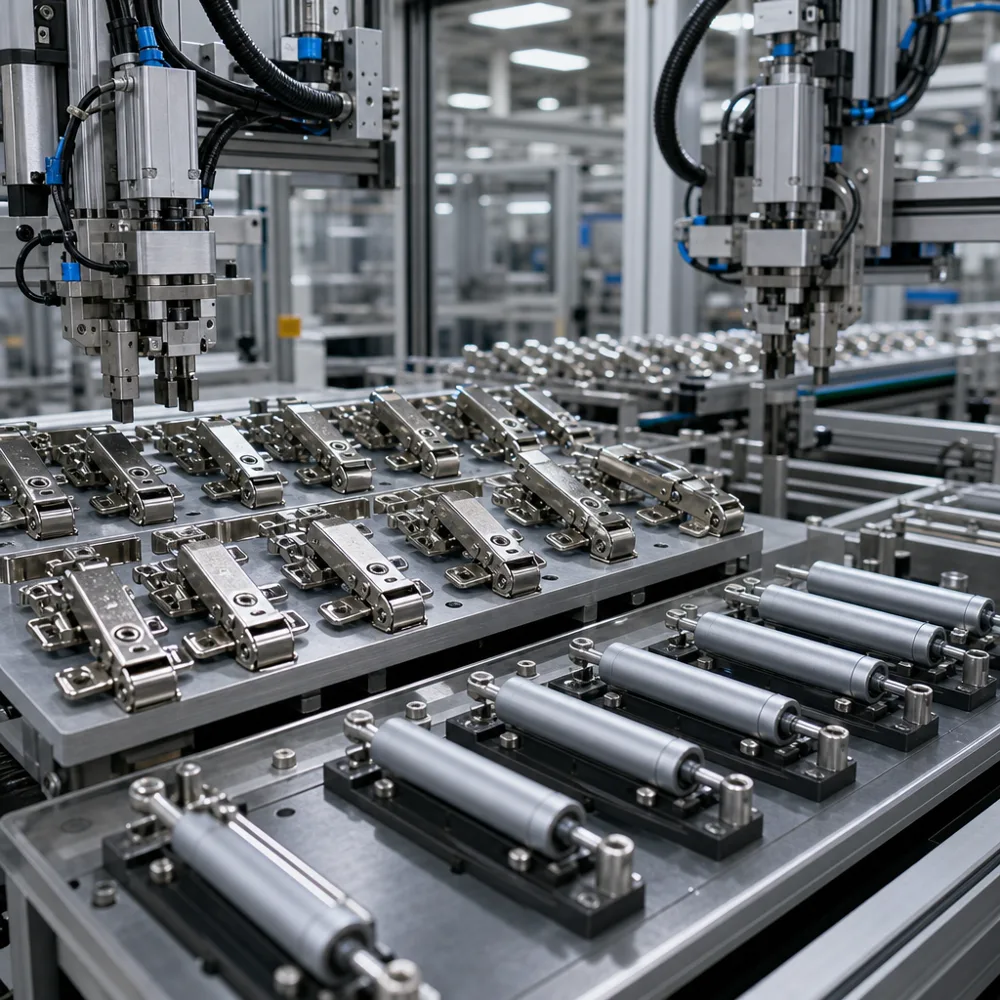
These integrated two-way motion systems prevent the very structural damage that makes hardware removal so difficult. By eliminating severe sheer stress, the mounting plates remain firmly anchored in the soft particleboard. True manufacturing quality relies on independent patent development and progressive dampening shapes.
Rigorous industrial testing protocols dictate the accepted baseline for mechanical endurance. Quality architectural hardware must endure tens of thousands of continuous opening cycles without losing internal hydraulic pressure. Achieving this consistency requires excellent manufacture management and premium raw materials.
Navigating Special Angled and Corner Configurations
Not all storage units utilize standard perpendicular right angles. Deep corner cabinets, pie-cut lazy susans, and diagonal blind units require highly specialized motion geometry. Removing these complex mechanical assemblies demands acute attention to specific part locations.
A folding bi-fold corner door utilizes two distinct joint systems working in tandem. The primary structural joint connects the first door to the cabinet box, requiring a wide opening arc. The secondary joint connects the two moving wooden panels together.
When dismantling a complex bi-fold system, always remove the central connecting hardware first. Trying to remove the primary box mount while the secondary panel is still attached creates dangerous asymmetrical torque. The combined panel weight acts as a massive lever against a single pivot point.
Blind corner applications utilize specific mounting plates with heavily extended offsets. These thick metal blocks push the pivot point out past a blank wooden fascia board. Labeling these specific offset plates during removal is mandatory to preserve complex panel alignment later.
Frequently Asked Questions Regarding Hardware Alteration
What causes a concealed cup joint to suddenly snap open aggressively?
The internal spring mechanism relies on highly specific metal tension. If the door panel exceeds the intended weight limit, the spring suffers microscopic metal fatigue. The hardware physically forces itself into the mechanical path of least resistance.
Can I mix different brands of mechanical hardware on a single wooden panel?
Mixing different components creates conflicting kinetic arcs during operation. Different manufacturers use varied cup depths, pivot point geometries, and main arm lengths. Forcing mismatched hardware to operate together physically rips the mounting screws out of the wood.
Why does the wooden door drop downward after I remove and reinstall the exact same components?
Wood fibers compress permanently under initial screw thread pressure. When you reinsert a metal screw into an existing wooden hole, it lacks the original physical grip strength. You must adjust the vertical cam screw on the mounting plate to compensate for this minor sag.
Is there a specific chemical solvent to loosen bound adjustment screws?
Applying a microscopic drop of penetrating oil to the thread junction helps dissolve localized rust deposits. You must let capillary action draw the fluid inward slowly for several hours. Avoid spraying aerosol lubricants directly, as they degrade the internal hydraulic dampening fluids completely.
Maintaining Kinetic Alignment After Reinstallation
Successfully removing and replacing cabinet hardware is only half the mechanical equation. A newly installed wooden panel rarely aligns perfectly on the very first attempt. The visual gaps between wooden frames require deliberate physical manipulation of the internal adjustment screws.
The modern three-axis adjustment system is a genuine marvel of microscopic domestic engineering. The front-facing adjustment screw located on the main arm controls lateral movement. Turning this screw precisely pushes the door left or right, ensuring parallel gaps between adjacent panels.
The rear adjustment screw actively controls the depth of the panel relative to the cabinet box. If the hinged side of the door physically rubs against the wooden frame, adjusting this depth screw pushes the mechanism outward. This minor adjustment creates necessary kinetic operating clearance.
Vertical structural adjustment typically occurs directly at the static mounting plate itself. Advanced mounting plates feature a central rotary cam screw that slides the entire mechanism vertically. Proper mechanical alignment distributes the physical load equally across all installed metal joints.
Future Trajectories in Cabinet Motion Systems
The strict boundary between passive mechanical hardware and active electronic systems is blurring rapidly. Premium domestic storage environments are increasingly adopting push-to-open electronic actuators. These active systems eliminate the absolute need for external decorative handles entirely.
Future kinetic structural designs focus heavily on integrated micro-sensor technology. Internal arms equipped with microscopic load sensors could easily detect mounting failure before the wooden panel detaches. This predictive maintenance data would quietly alert homeowners via connected domestic mesh networks.
Advanced metallurgy continues to aggressively push the established limits of load-bearing physical capacities. Carbon-infused steel composites offer the sheer tensile strength of heavy industrial hardware with the minimal footprint of domestic components. This materials science breakthrough allows for massive architectural panels that move effortlessly.
Mastering the foundational skill of how to remove cabinet door hinges provides a deeper understanding of these evolving mechanical ecosystems. The basic underlying physics of load distribution and kinetic friction remain perfectly constant, even as the materials improve. Precision manufacturing ensures our complex living spaces function seamlessly behind closed doors.
CONTACT US


GuangDong JinLi XiangXing Precision Metal Manufacturing Co., Ltd.
We are always providing our customers with reliable products and considerate services.
If you would like to keep touch with us directly, please go to contact us
-

Home
-

Tel
-

Email
-

Contact